

Everyone wants to optimize operations, but no one wants to own the responsibility.
Interest in energy efficiency within the real estate industry is greater than ever. Yet, far from all projects make the leap from individual pilot properties to entire portfolios. Why is that?
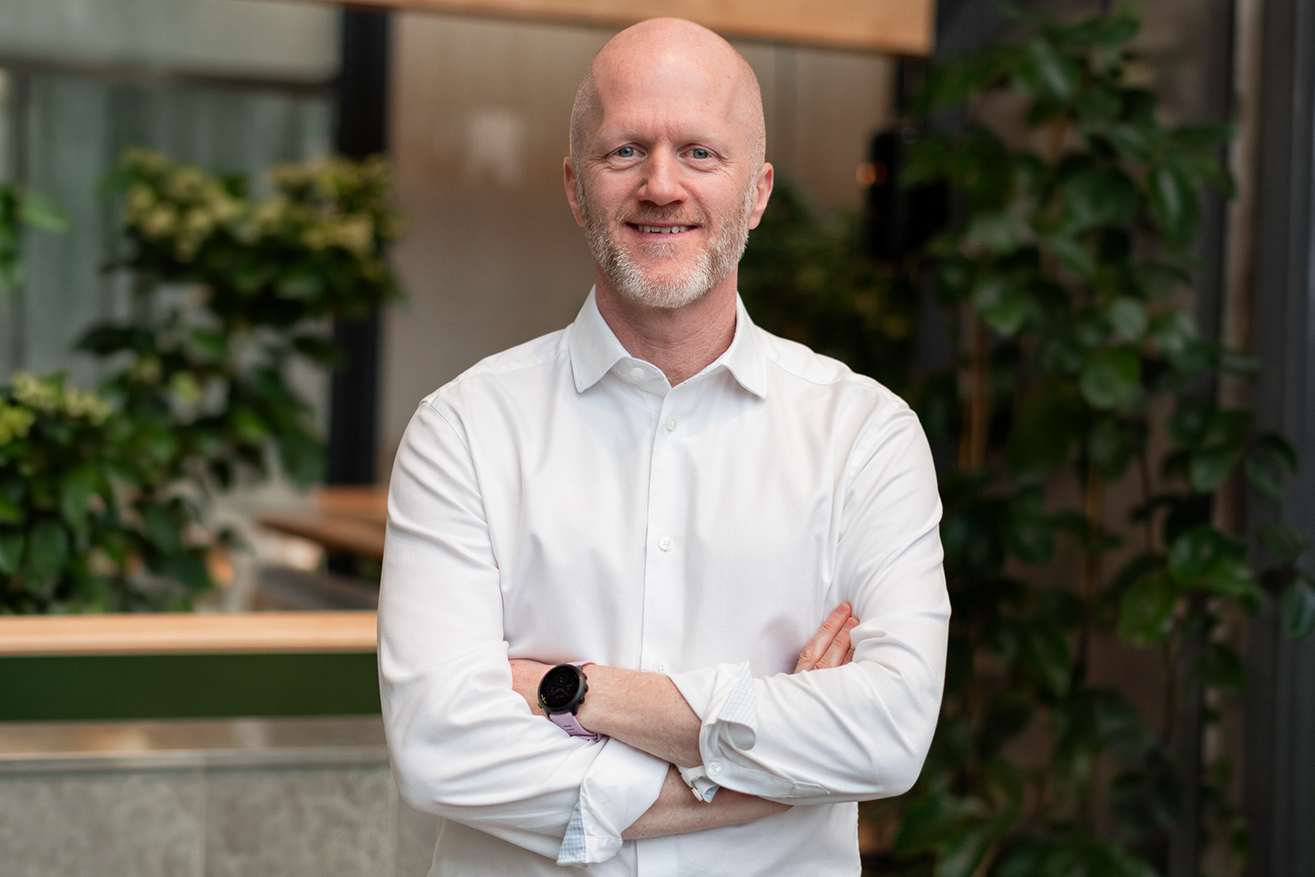
Per Adolfsson, CEO of Algeno, has been mulling over this question for a long time, especially following conversations during Almedalen Week this summer. He believes the answer lies in neither technology nor willpower.
An industry full of good intentions
– “I see that we’re doing an incredible amount in the industry, and that progress is moving forward at a fantastic pace,” says Per Adolfsson. “At the same time, I get frustrated because what we’re talking about still involves pilot projects: individual properties or neighborhoods, not entire portfolios.”
The idea that this pattern stems from a lack of commitment or stress over looming legal requirements is simply not true—quite the opposite.
– Many Swedish real estate companies have already gone well beyond the legal requirements and are instead focusing on how they can improve their bottom line and save more money through energy-efficiency measures, he continues. Among those who have been most successful, I’ve never heard anyone say they got started because legal requirements were on the horizon. Instead, they wanted happier tenants or to save money and kilowatt-hours—and all in all, it turned out to be a good business decision.
The names come quickly when Per is asked to give examples of commitment: Oskar Sheiene and Daniel Hedman at Bostadsbolaget. Johan Ålund and his colleagues at Stena Fastigheter. And many, many more. Not least Jonas Tannerstad and his team at ÖrebroBostäder, and Jonas Larsson and his team at Sveafastigheter.
“They’re so committed and passionate that they drive the effort on a broad front and achieve results far better than what the law requires,” says Per Adolfsson. So how is it that the sparkle dims along the way for some?
The Issue No One Wants to Own
Even among the most enthusiastic, progress often stalls on the path from pilot project to full-scale implementation. According to Per Adolfsson, this is because no one really knows whose desk the issue belongs on.
“You need to look at who owns the issue,” he says, listing the options one by one: a technical issue, an IT issue, an operational issue, a financial issue. Almost everyone is enthusiastic about the pilot project, which is often driven by operations. But when it's time to scale up, it’s no longer an operational or technical project—it becomes a project that spans the entire organization. And that’s when it can get stuck, because no one has overall responsibility.
It’s a simple observation with major consequences: ownership that belongs to everyone easily belongs to no one. But it can be solved, and there’s already proof of that.
“Where we’ve seen great success is, for example, at Huddinge Samhällsfastigheter,” says Per Adolfsson. They introduced the role of “operations optimizer”—someone who, for a set period, was given full focus and resources to optimize operations without having to solve all the other problems that an operations technician encounters. This led to very good results.
Think of the Entire Portfolio
If ownership is one half of the problem, perspective is the other.
“You never implement a new rent notification system for just a few properties. You do it for the entire portfolio,” says Per Adolfsson. The same approach is needed for optimization. You can certainly test it on a few properties first, but the starting point should be how the solution will work for the entire portfolio. Otherwise, you’ll soon end up with several different systems for different properties—and no overall view.
Pilot projects in and of themselves aren’t the problem, Per emphasizes. The problem is pilot projects without a plan for what happens afterward.
“If you haven’t planned from the very beginning to implement the solution across the entire portfolio, it’s actually pointless to test it, because then it will never be scaled up,” he says. Only test things you’ve already planned to roll out on a full scale.
It’s a recurring contrast throughout the conversation: between the small and the whole, between testing and getting serious. The same technology, the same commitment, but completely different outcomes depending on which of the two you’ve actually planned for.
Say hello to the operations optimizer
If you ask Per Adolfsson what the solution really is, he doesn’t hesitate for long.
“My observation is that the role of operations optimizer is needed in many real estate companies,” he says.
That doesn’t mean anyone is doing anything wrong today; rather, it means that the right work isn’t being given the attention it deserves.
“Many people are already working on operations optimization—that’s not what’s missing,” he explains. What’s missing is a dedicated role—one that doesn’t have to juggle everything else an operations technician does while tenants are calling to say it’s too cold, too hot, or that something is leaking. That’s when operations optimization takes a back seat.
It’s a scenario many in the industry will likely recognize: important work that never really gets to be the only thing on the agenda.
A great sense of hope
After all, Per Adolfsson isn’t pessimistic. The hope he harbors, however, is of the more down-to-earth, less romantic kind.
“There’s a lot of interest in change. But above all, it’s going to be very expensive for those who don’t take action,” he says. Those who don’t prioritize this area will wake up in a few years to poor profitability—if they aren’t already facing it. Operating costs will eat into profitability.
The commitment is there. The technology is in place. We’ve crossed the starting line. What’s missing is a clear place within the organization where the issue can take root, grow, and be scaled up.



Please follow us on LinkedIn and subscribe to our newsletter for product updates, events and other things happening at Algeno.


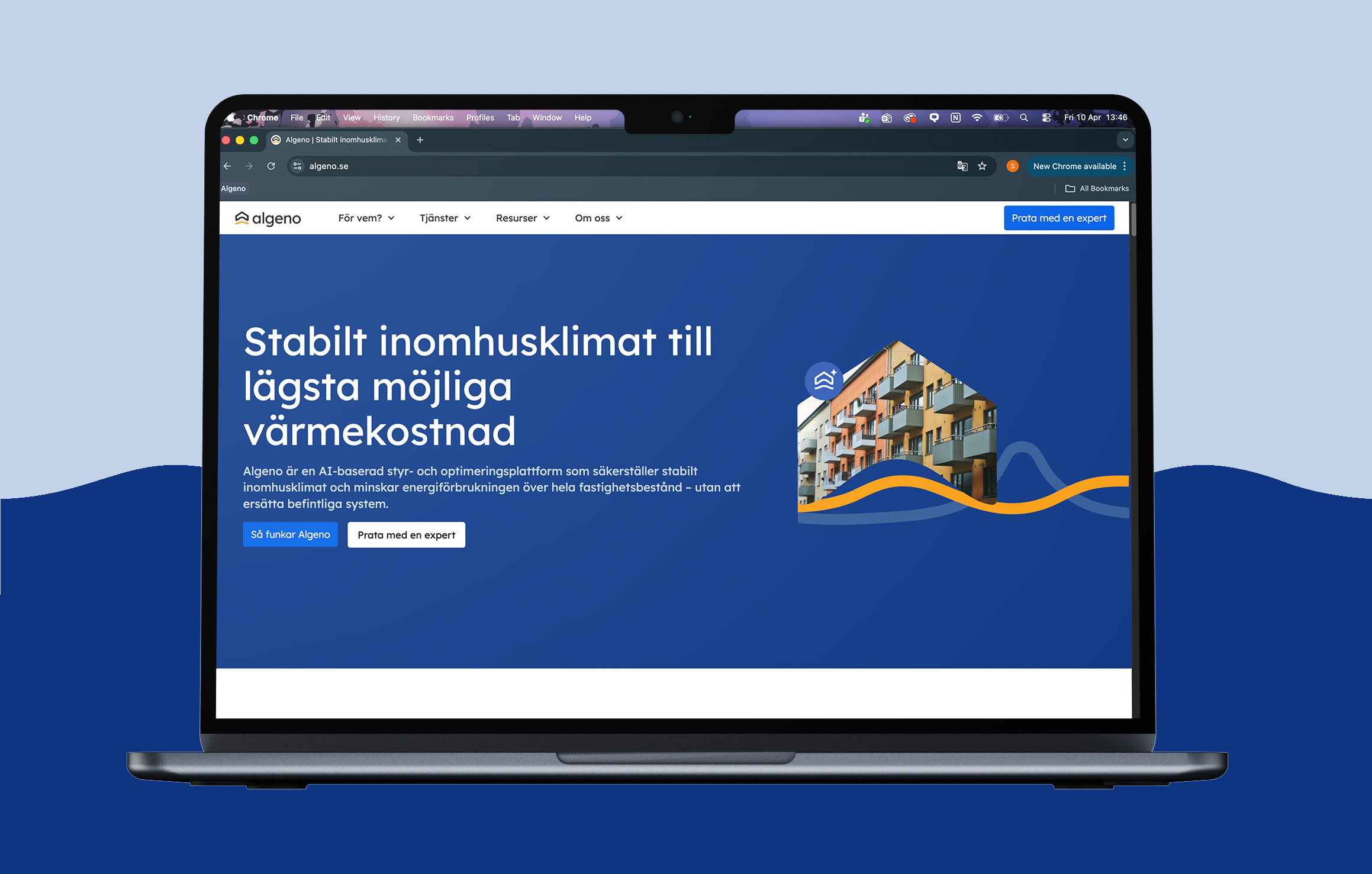
Algeno is an AI-powered service for heating optimization and energy efficiency of buildings that delivers a stable indoor climate and lower heating costs in apartment buildings, offices and public properties.

+46 702 63 26 11

info@algeno.se

Läraregatan 3, 411 33 Göteborg, Sweden
Algeno © 2026 All rights reserved